
A missed specialist appointment isn’t just an empty slot on the calendar. It’s a patient who needed care and didn’t get it, and revenue the practice already planned around. No-shows are one of the most persistent, measurable problems in specialty care, and one of the few with a genuinely well documented fix: automated text reminders.
This post looks at what the data actually says about text reminders and no-show rates, what other resources on this topic tend to cover, where a basic reminder system falls short, and how DoctorFare’s patient communication tools are built specifically around what actually reduces no-shows.
The Scale of the No-Show Problem
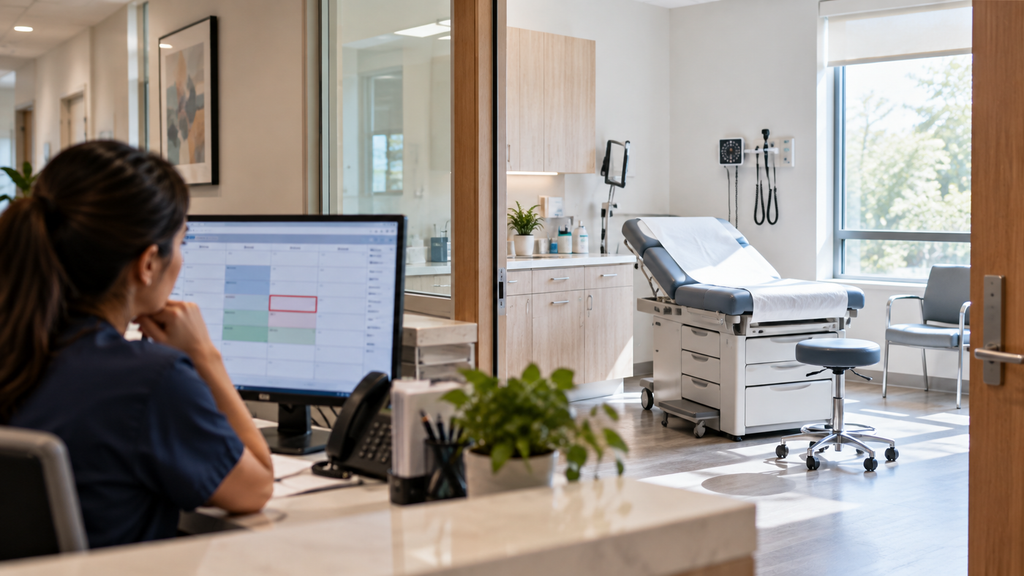
Missed appointments cost the U.S. healthcare system significantly. No-show rates average between 15 and 30 percent across the industry, contributing to over $150 billion in annual losses. At the practice level, the numbers are just as direct. A missed appointment typically costs a private practice around $200 per empty slot, and can add up to $150,000 in lost annual revenue.
For specialty practices specifically, the stakes are often higher. Specialist slots are harder to refill on short notice, and a missed cardiology, imaging, or orthopedic appointment usually represents a larger revenue loss per visit than a routine primary care check in.
What the Research Actually Shows About Text Reminders

The evidence for text based reminders is unusually well studied for a healthcare operations question. A widely cited study from Imperial College London’s Department of Primary Care and Social Medicine found no show rates were 38 percent lower among patients who received a text message appointment reminder compared to those who didn’t.
That figure holds up across other research too. SMS reminders are consistently shown to reduce missed appointments by 26 to 38 percent, and some studies report the reduction as high as 50 percent. The reason texting outperforms most alternatives comes down to simple visibility. SMS messages have a 98 percent open rate, compared to roughly 26 percent for email, and a text arrives directly on a patient’s lock screen and is typically seen within minutes, while a phone call often goes straight to voicemail.
Real practice data backs this up. One healthcare network reduced its no show rate by an average of 35 percent, bringing specialist treatment no shows down from 18 to 20 percent to 13 percent, after implementing automated reminders.
What Other Coverage of This Topic Tends to Focus On
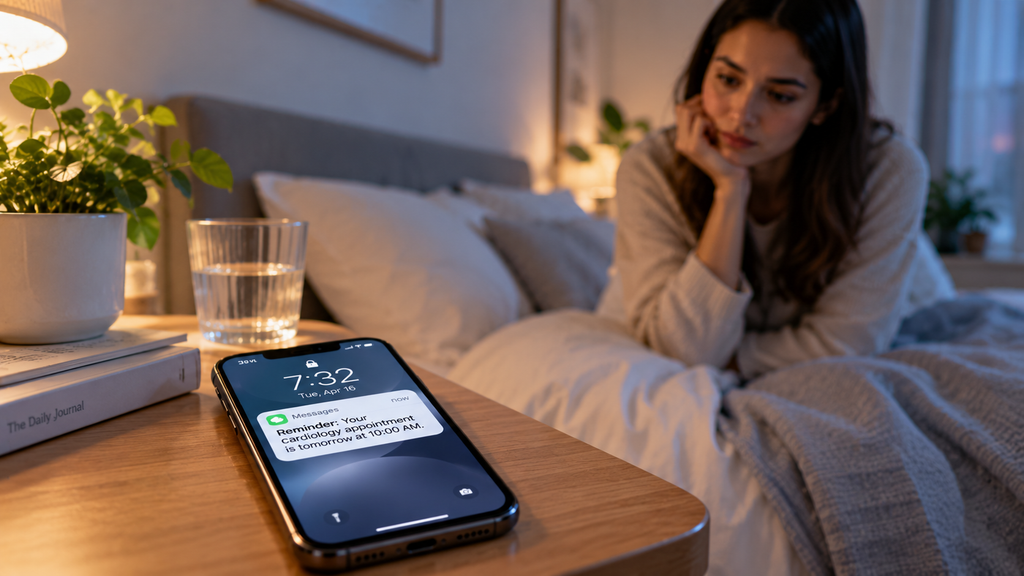
Most existing content on automated reminders falls into one of two camps. Some sources, like general patient engagement and EHR messaging platforms, focus heavily on the raw statistics (the 26 to 50 percent reduction figures) as the entire case for adoption. Others, particularly newer AI voice and scheduling platforms, argue that texting alone is no longer enough and point to a 2024 MGMA poll where 37 percent of practice leaders reported increasing no show rates despite broader use of automated reminders, even as only 13 percent reported improvement.
That second point is worth taking seriously rather than glossing over. It doesn’t mean text reminders don’t work. It means a one way broadcast text that only confirms a message was sent isn’t the same thing as a system that actually changes patient behavior. A high delivery rate proves a text left the building. It doesn’t prove a patient read it, understood it, or freed up the slot if they weren’t coming.
What Actually Separates an Effective Reminder System
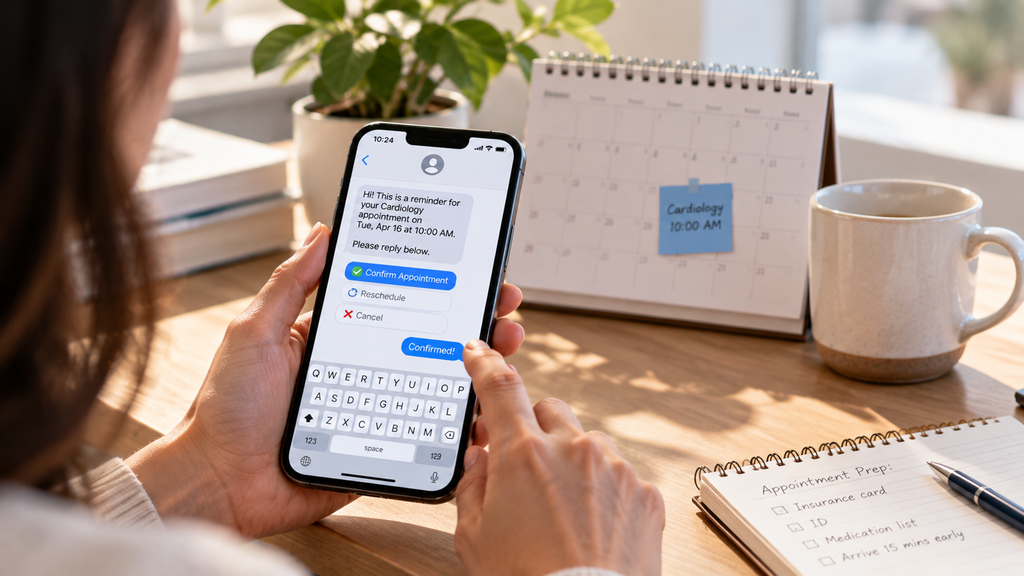
A few patterns distinguish reminder systems that measurably reduce no-shows from ones that just generate confirmation receipts:
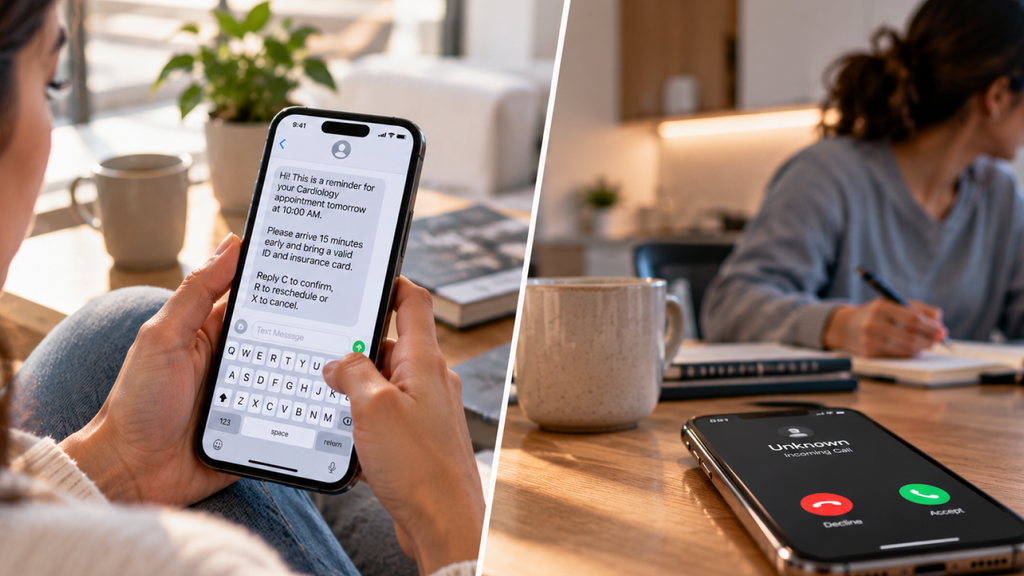
Two way communication matters more than delivery volume. A reminder a patient can reply to, to confirm, cancel, or reschedule in the same thread, gives the practice a real chance to fill the slot instead of just recording that a message was sent.
Timing should be strategic, not arbitrary. A common, effective pattern is a reminder at 48 or 24 hours out, with a closer follow up nearer the appointment time.
High risk visits need more than a single text. New patients, procedures, and exams with prep requirements benefit from earlier and more persistent outreach than a routine follow up.
Reminders should carry real information, not just a date and time. For specialist visits especially, prep instructions, what to bring, and what to expect reduce both no shows and same day cancellations caused by unprepared patients.
How DoctorFare’s Patient Communication Is Built for This
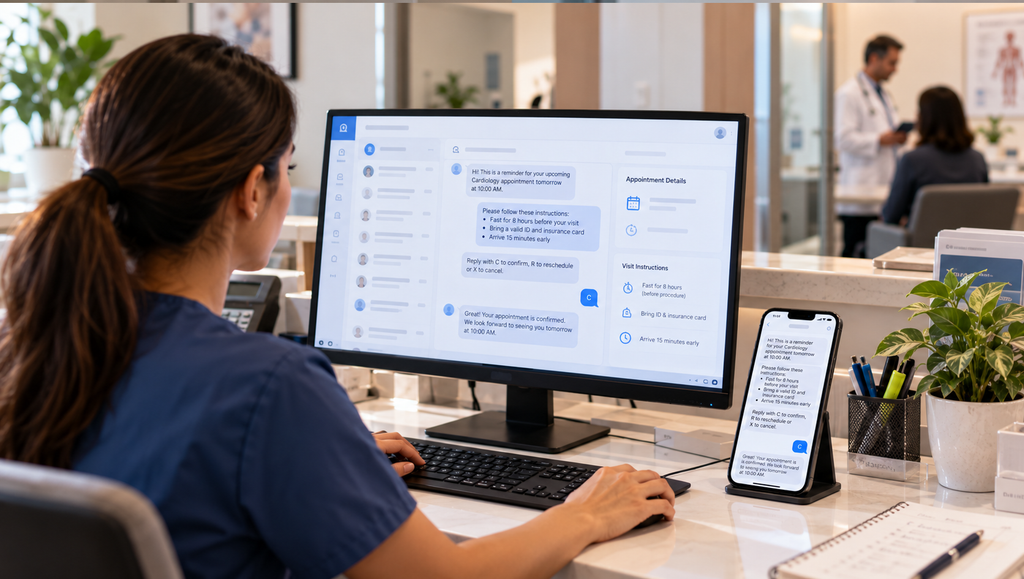
DoctorFare’s Patient Communication feature maps directly onto each of the factors above, rather than functioning as a one way broadcast tool.
Two way texting, not one way alerts. Patients can confirm, reschedule, or cancel an appointment by replying directly in the same message thread. This is the single factor the research points to most consistently. A reminder a patient can act on in the moment recovers a slot that a one way alert simply logs as missed.
Visit specific prep instructions, sent automatically. For specialist and imaging visits especially, DoctorFare sends the actual information a patient needs (fasting requirements, what to bring, what to expect) rather than a generic date and time reminder. This addresses one of the more overlooked causes of no-shows and same day cancellations: patients who show up unprepared, or don’t show up because they weren’t sure what the visit required.
A single dashboard showing who has responded. Staff can see which patients have confirmed, which haven’t replied, and which may need a follow up call, instead of guessing whether a batch of texts actually worked. This turns reminder sending from a blind broadcast into something staff can act on before the appointment day arrives.
HIPAA compliant messaging by design. Because the platform is built for healthcare communication specifically, prep details and visit specific information can be included in reminders without adding compliance risk, which is not always true of general purpose texting tools.
Frequently Asked Questions
How much do automated text reminders actually reduce no-shows?
Research consistently shows SMS reminders reduce missed appointments by 26 to 38 percent, with some studies reporting reductions as high as 50 percent, depending on the population and reminder system used.
Are one way text reminders enough to reduce no-shows?
Not on their own. A one way reminder confirms a message was sent but gives the practice no way to act if a patient isn’t coming. Two way reminders that let patients confirm, cancel, or reschedule in the same thread are what actually free up slots to be refilled.
Why do text reminders work better than phone call reminders?
Text messages have a 98 percent open rate compared to roughly 26 percent for email, and are typically read within minutes, while phone calls often go to voicemail and require a callback to resolve.
Do automated text reminders work for specialist visits with exam prep requirements?
Yes, and this is where reminders add the most value beyond a simple date and time. Visit specific prep instructions sent ahead of a specialist or imaging appointment reduce no-shows caused by confusion or lack of preparation, not just forgetfulness.
Is automated patient texting HIPAA compliant?
It depends on the platform. Reputable healthcare specific messaging tools, including DoctorFare’s Patient Communication, are built on HIPAA compliant infrastructure, but this should always be confirmed directly with any vendor.
Conclusion
The data on automated text reminders is about as strong as this kind of operational question gets. The open question isn’t whether to use them, it’s whether the system in place does more than confirm a message was sent. A connected, two way reminder system, one that lets patients respond in the moment, sends visit specific information, and gives staff visibility into who still needs a nudge, is what turns a reminder into a filled appointment instead of a missed one.
See how DoctorFare’s Patient Communication reduces no-shows →