

Most practices lose patients not because their care is lacking, but because booking an appointment requires a phone call during business hours. Patient self scheduling removes that barrier by letting patients search availability, pick a time, and confirm an appointment on their own, without waiting on hold or waiting for the office to reopen.
This guide covers what patient self scheduling actually involves, what the research says about adoption and results, where implementations commonly fall short, and how DoctorFare approaches self-service booking for specialty practices and imaging centers.
What Is Patient Self Scheduling?
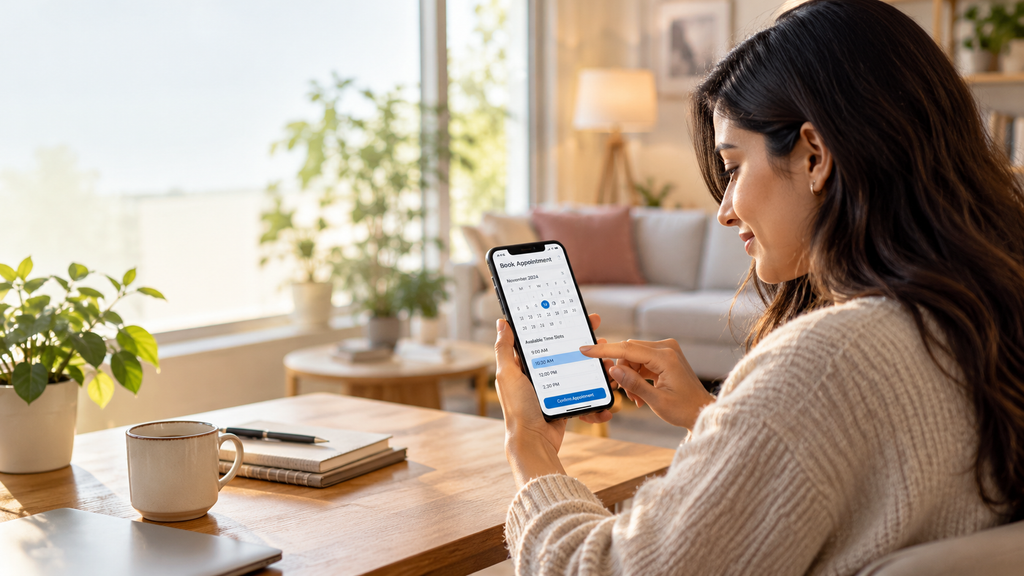
Patient self scheduling is the ability for patients to book their own healthcare appointments online, through a website, portal, booking link, or text message, at any time of day, without needing a staff member to arrange it.
In practical terms, it replaces the traditional booking sequence, where a patient calls, waits on hold, describes what they need, and waits while someone checks a calendar. Instead, the patient sees real availability directly, selects a slot that works, and receives confirmation immediately.
The term is sometimes used interchangeably with online appointment booking or self-service appointment booking. The underlying idea is consistent across all three: the patient, not the front desk, drives the scheduling action.
What Self Scheduling Is Not
It is worth being clear about one common misconception. Self scheduling is not a replacement for phone access, and framing it that way sets practices up for disappointment. Industry practitioners make this point directly, noting that self-scheduling is an additional channel rather than a substitute, and that practices should maintain strong phone access alongside it for patients who prefer that mode.
The goal is to give patients a second path that works when the first one does not, particularly outside business hours or when the phone line is already busy.
Why Patient Self Scheduling Matters Now
The case for self-service booking has moved from convenience argument to expectation. The data across several independent sources points the same direction.
Patients Prefer It, and Strongly
When patients are given the choice, the preference gap is wide. When all options are available, 67% would choose to book online, while only 22% would choose to make a phone call. A separate figure puts it more bluntly: 80% of patients express a preference for physicians who offer online scheduling options.
More recently, patient self scheduling was ranked as the number-one requested digital feature among patients under 55 in McKinsey’s 2025 Healthcare Consumer Survey.
A Large Share of Bookings Happen Outside Office Hours
This is the finding most practices underestimate. An Accenture report found that 43% of self-scheduled appointments are booked after business hours.
That figure reframes the entire conversation. Nearly half the demand for self scheduling exists at times when no amount of front-desk staffing would have captured it. Those patients were not choosing between calling and clicking. They were choosing between booking with you or waiting until they had a free moment during the workday, which for many people never reliably arrives.
The Operational Case Is Documented Too
The benefits are not limited to patient preference. Research reviewing automated patient self-scheduling identified organizational advantages including labor savings, cost reduction, improved cycle time, patient satisfaction, and patient attendance, and noted that self-scheduling removes the barriers created by the fixed capacity of phone lines and scheduling staff.
That last point deserves attention. A practice can only answer as many calls as it has phone lines and people. Self scheduling has no equivalent ceiling.
On staffing specifically, studies indicate that automating appointment scheduling can free up one full-time equivalent position for every 100 self-scheduled appointments, allowing staff to focus on higher-value work.
It Also Affects Whether Patients Show Up
There is reasonable evidence that self-scheduled appointments are kept more often. Patients are more likely to keep appointments they have scheduled themselves, leading to fewer no-shows and cancellations.
The logic is intuitive. A patient who actively chose a specific time, rather than accepting whatever the front desk offered, has more ownership of that commitment.
Where Patient Self Scheduling Commonly Falls Short
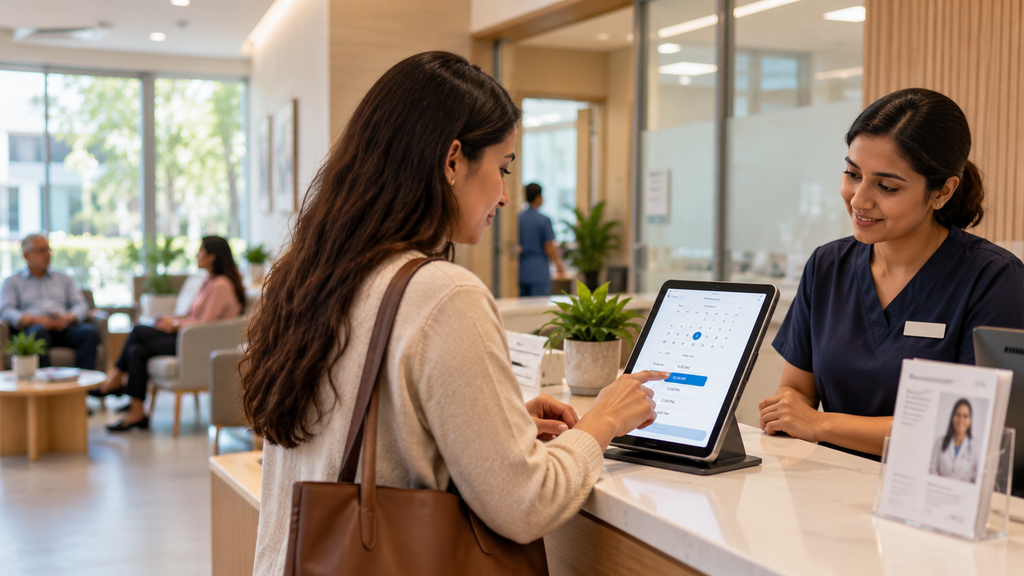
Adoption has not been universal, and it is worth understanding why rather than assuming any self-scheduling tool produces the results above. Research has noted that despite evidence of the potential benefits, organizational uptake has been limited, with contributing factors including cost, leadership, and policy considerations.
A few practical failure patterns show up repeatedly.
Availability that is not actually real. If the slots a patient sees are not synchronized with what the practice can genuinely accommodate, self scheduling creates a new problem rather than solving an old one. Staff end up calling patients back to move appointments, which is worse than the original phone-based process.
No handling of what the visit actually requires. Specialty and imaging appointments frequently have prerequisites, a referral, a specific exam type, insurance verification. A booking tool that ignores these produces appointments that cannot proceed as booked.
Booking that ends at the booking. A confirmation screen is not the end of the patient’s needs. If the patient still has to call to ask what to bring, whether to fast, or where to send a referral, the phone call was deferred rather than eliminated.
Treating it as all or nothing. Practices sometimes hesitate because not every appointment type is appropriate for self scheduling. That is a reason to scope it carefully, not to skip it. Reserving a percentage of capacity for specific appointment types is a common approach in practice.
What to Look For in Patient Self Scheduling Software

Based on the failure patterns above, a few capabilities separate self-scheduling tools that reduce work from ones that redistribute it.
Real-time availability. Patients should see what is genuinely open, not a request form that a staff member then has to review and respond to. A request form is a lead capture tool, not self scheduling.
Search that matches how patients actually look for care. Patients think in terms of what they need, where they are, and whether their insurance is accepted. A booking flow organized around internal provider structures rather than patient-facing criteria creates friction at the exact moment you are trying to remove it.
Support for the paperwork the visit requires. For referral-driven specialties and imaging, the ability to handle referral documents and insurance information during booking prevents the appointment from stalling later.
Rescheduling and cancellation without a phone call. If a patient can book independently but must call to change anything, the front desk still absorbs the volume. Self-service should extend across the full appointment lifecycle.
Information delivered with the confirmation. Prep instructions, what to bring, and what to expect should reach the patient automatically rather than becoming a follow-up call.
Visibility for staff. Self-scheduled appointments should land in the same dashboard and status tracking as every other appointment, not a separate queue someone has to remember to check.
How DoctorFare Handles Patient Self Scheduling
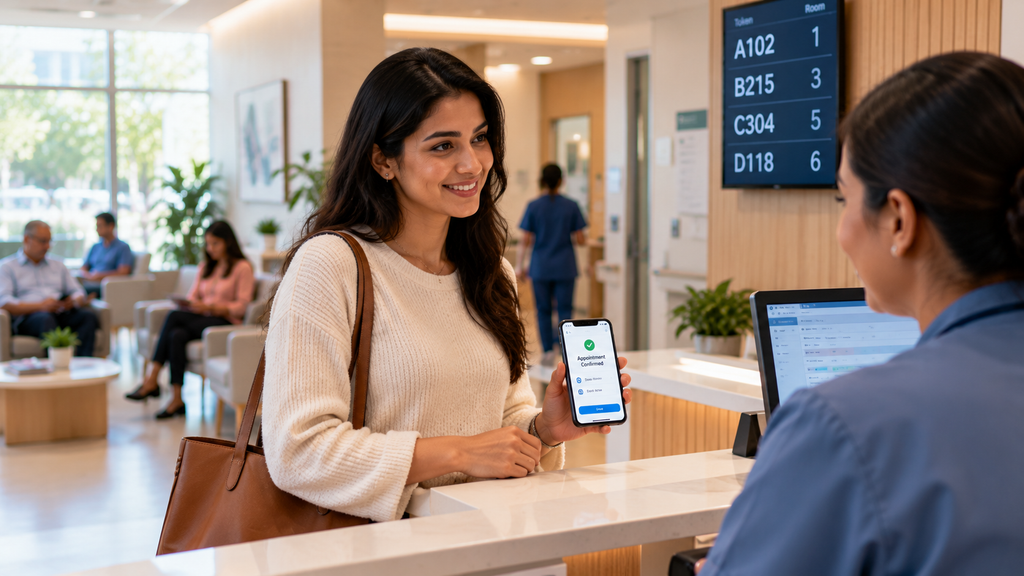
DoctorFare has spent years in the medical referral and patient access space, powering over 500,000 appointments, and built patient self-service around the specific booking realities of specialty practices and imaging centers.
Patients search by specialty, location, and availability, and can filter by accepted insurance, so they are comparing providers who are genuinely a fit before they book rather than discovering a mismatch afterward. Real availability is shown directly, and the patient selects a date and time from what is actually open, receiving instant confirmation rather than waiting for someone to call back.
Because many specialty and imaging appointments depend on a referral, patients can upload their doctor’s order and insurance card as part of the booking process itself. That removes one of the more common reasons a self-booked appointment cannot proceed as scheduled, and it means nothing needs to be faxed separately or brought in on paper.
Booking is also not the end of the interaction. Exam preparation instructions are sent automatically based on the specific visit, covering what to eat, what to avoid, and what to bring, well before the appointment date. If a patient still has a question, they can use chat support to ask the care team directly instead of calling and waiting on hold. Patients can reschedule or cancel from their own account without a phone call, and can access their past visits, reports, and records in the same place.
On the practice side, self-scheduled appointments are not separated from everything else. They enter the same appointment management dashboard as provider-booked and referral-driven appointments, organized by status, with the full lifecycle tracked from created through completed, cancelled, rescheduled, or no-show. Referral analytics then show how appointments are converting and where patients are dropping out of the process.
This matters because self scheduling is one booking path among several in DoctorFare. A referring provider can book on the patient’s behalf, a specialist can book or refer onward, or the patient can book themselves, and all three paths carry the same referral details, documents, and status through to the appointment record.
Getting Started With Patient Self Scheduling

A few practical points for practices considering it.
Start with appointment types that are genuinely straightforward. Routine follow-ups and standard exam types are usually the safest starting point. Complex or highly variable visits can stay phone-based initially.
Expect adoption to build over time. Practitioners report that self-scheduling share of bookings rises meaningfully over the first six to twelve months as patients learn the channel exists. Judging results after a few weeks understates what the channel eventually carries.
Promote the link where patients already are. A self-scheduling option nobody knows about does not get used. Including it in referral confirmations, reminders, and existing patient communication does more for adoption than adding it quietly to a website.
Measure the right thing. The useful metric is not how many patients used the tool. It is how many appointments were booked that would otherwise have been a missed call, an unreturned voicemail, or a patient who booked elsewhere.
Frequently Asked Questions
What is patient self scheduling?
It is the ability for patients to book their own healthcare appointments online, through a website, booking link, or text message, at any time, without needing to call the office or speak to scheduling staff.
Does patient self scheduling reduce no-shows?
Evidence suggests it helps. Patients tend to keep appointments they scheduled themselves at higher rates than appointments arranged for them, though reminders and clear prep information also play a significant role in attendance.
Will self scheduling replace our phone lines?
No, and it should not be positioned that way. Self scheduling works best as an additional channel alongside phone access, particularly for patients booking outside business hours, which accounts for a substantial share of self-scheduled appointments.
Can patients self-schedule appointments that require a referral?
They can, provided the booking flow accounts for it. On DoctorFare, patients can upload their doctor’s order and insurance card during booking, so the referral requirement is handled at the point of scheduling rather than becoming a problem later.
How much staff time does self scheduling actually save?
Research indicates automating appointment scheduling can free roughly one full-time equivalent position for every 100 self-scheduled appointments, with the savings coming primarily from reduced inbound call handling and manual booking.
Conclusion
Patient self scheduling is no longer a differentiator that puts a practice ahead of the curve. It is closer to a baseline expectation, particularly among patients who are actively choosing between providers based on how easy it is to get in the door.
The practices that get the most from it are the ones that treat it as more than a booking button. When self-service booking carries the referral, delivers the prep instructions, allows rescheduling without a call, and lands in the same system the rest of the practice works from, it stops being a separate channel and starts being the way a meaningful share of appointments simply happen.
See how DoctorFare’s patient self-service booking works for your practice →