
Reducing no-shows is one of the most direct ways a practice can recover revenue it has already planned around. A patient who books and never arrives leaves behind an empty slot, idle staff time, and a delay in care for someone else who could have used that appointment. The problem is common, well studied, and mostly fixable, but it is rarely fixed by a single tactic.
This guide covers what no-shows actually cost, why patients miss appointments, the strategies with real evidence behind them, what reminders can and cannot do, how to measure progress, and where DoctorFare fits for practices that depend on referrals and prepared patients.
What Is a No-Show, and Why Does the Definition Matter?
A no-show happens when a patient fails to attend a scheduled appointment without giving prior notice. That definition sounds simple, but practices apply it differently. Some count a same-day cancellation as a no-show. Others count only patients who never called. Reported rates vary partly because of these differences, which is why comparing your number to a benchmark only works when you are measuring the same thing.
It helps to separate three outcomes:
- No-show: the patient does not arrive and did not notify the practice
- Late cancellation: the patient cancels too close to the appointment for the slot to be refilled
- Early cancellation or reschedule: the patient changes the appointment with enough notice to rebook the slot
These have different causes and different fixes. An early reschedule is a healthy outcome. A silent no-show is the costly one. Reducing no-shows is partly about converting the second into the first, by making it easy for patients to tell you when plans change.
How Common Are No-Shows?
The numbers are large enough that most practices underestimate them. A systematic review of 105 papers found an average no-show rate of 23% across studies, with substantial variation by region. Other reviews of outpatient settings report ranges from roughly 5% to 34% depending on the specialty and patient population.
At the national level, missed appointments are commonly estimated to cost the U.S. healthcare system around $150 billion a year. At the practice level, the cost shows up as unrecoverable provider time, wasted preparation, and referrals that never convert into completed visits.
Specialty care carries an added layer. Specialist slots are harder to refill on short notice, and a missed appointment often delays a diagnosis rather than just a routine check-in. In imaging, the equipment cost continues whether or not the scanner is in use. One study of outpatient MRI appointments found a combined no-show or reschedule rate of 34.8%, and noted that missed appointments lead to wasted slots and double occupancy of scanning blocks.
Why Patients Miss Appointments

Treating no-shows as a motivation problem leads to the wrong fixes. Patient no-shows are more often a workflow and access problem than a willingness problem. The most common causes fall into a handful of groups.
- Forgetting. Appointments booked weeks or months ahead are easy to lose track of. Longer gaps between booking and the visit are a known risk factor.
- Friction in changing plans. If rescheduling requires a phone call during business hours, many patients simply skip the call and skip the appointment.
- Unclear expectations. Patients who do not know what the visit involves, what to bring, or how to prepare are more likely to disengage or arrive unprepared.
- Cost and coverage surprises. Patients who hit an unexpected cost, a coverage question, or a missing form at the front desk sometimes leave, and that visit becomes a no-show that never gets counted as one.
- Transport and scheduling conflicts. Work, childcare, and travel problems are real, and they are often solvable if the patient has an easy way to reschedule.
- New patient status. New patients have been found to miss appointments more often than established patients, in part because they are unfamiliar with the practice and its processes.
- Long waits for the appointment itself. The longer a referral sits unbooked, the more likely the patient is to lose the thread and never appear on the schedule at all.
Notice how many of these trace back to what happens before the patient arrives: how easily they could book, how clearly they were informed, and how simply they could change their mind.
Strategies for Reducing No-Shows
The strategies below are ordered roughly by how much evidence supports them and how broadly they apply. Most practices see the best results by combining several rather than relying on one.
1. Send Reminders, and Make Them Two-Way
Reminders are the most studied intervention. A randomized study from Imperial College London found no-show rates were 38% lower among patients who received a text reminder than among those who did not. A systematic review of telephone and SMS reminders across hospital appointments reported a weighted mean reduction in non-attendance of 34%. Across studies, SMS reminders reduce no-show rates by roughly 20 to 38% compared with no reminder.
How the reminder works matters as much as whether it exists. A one-way message confirms that something was sent. A two-way message lets the patient confirm, ask a question, or request a change in the same thread. That gives the practice a chance to refill a slot instead of finding out after the fact.
Timing also matters. Reminders sent too early get forgotten and reminders sent too late leave no time to refill the slot. A common pattern is an initial reminder several days out, with a closer reminder in the day or two before the visit.
2. Make Booking Easy
Patients who book on their own terms tend to show up more. In one outpatient study, online bookings had fewer missed visits than phone bookings, 1.8% compared with 5.9%. That is a single study and results will vary, but the logic is consistent. A patient who picked a specific time that suited them has more ownership of that commitment than one who accepted whatever was offered on a call.
Self-scheduling also removes the barrier that causes some patients to book late or not at all. Many patients look for appointments outside office hours, and a booking option that works at any time captures them before they lose interest.
3. Shorten the Gap Between Booking and the Visit
Long lead times raise risk. Appointments scheduled months in advance are a well-documented risk factor, because patients forget, circumstances change, or they find care elsewhere in the meantime.
Where possible, shorten the wait. That might mean releasing slots closer to the date, reducing backlogs in referral queues, or moving to scheduling models that offer same-day or near-term access. A review of open access scheduling in outpatient clinics found it very effective for reducing no-shows, though it noted that results depended on conditions such as a needs assessment, system design based on actual patient and provider needs, cooperation among stakeholders, and consistent training.
4. Make Rescheduling and Cancelling Painless
Some of the cheapest no-show reductions come from converting no-shows into cancellations. If a patient can change an appointment in seconds, from a link or an account, many will do it rather than simply not showing up. That frees the slot for someone else and keeps the patient in your system.
The reverse is also true. A patient who has to call, wait on hold, and risk a lecture is more likely to avoid the call entirely.
5. Tell Patients What to Expect
Information reduces anxiety and confusion. Patients who know where to go, what to bring, whether to fast, and how long the visit will take are more likely to attend and more likely to arrive ready. This matters most for visits with preparation requirements, such as imaging, procedures, and specialist consultations.
Clear instructions also reduce a related problem: patients who arrive but cannot be seen because they were not prepared. That is not technically a no-show, but it costs the same slot.
6. Remove Front-End Friction
Patients who reach the front desk and encounter a surprise cost, an unflagged coverage question, or a missing form sometimes walk out. Completing intake, insurance capture, and eligibility checks before the visit removes that trigger. Healthcare finance guidance treats eligibility verification and pre-registration as pre-service patient access work, not day-of tasks, for exactly this reason.
7. Track No-Shows and Look for Patterns
No-shows are rarely random. They often cluster by appointment type, time of day, day of week, referral source, or patient group. Tracking them by these dimensions turns a general complaint into a specific problem. A practice may find that a particular exam type, a certain provider’s schedule, or a specific referring office accounts for a disproportionate share.
8. Think Carefully About No-Show Policies
Some practices introduce fees or restrictions for repeated no-shows. The evidence on charging is more mixed than the evidence on reminders and easier access, and policies can affect different patient groups unevenly. If you use one, apply it consistently, communicate it clearly at booking, and consider whether the underlying cause is something you could fix instead.
What Reminders Cannot Fix
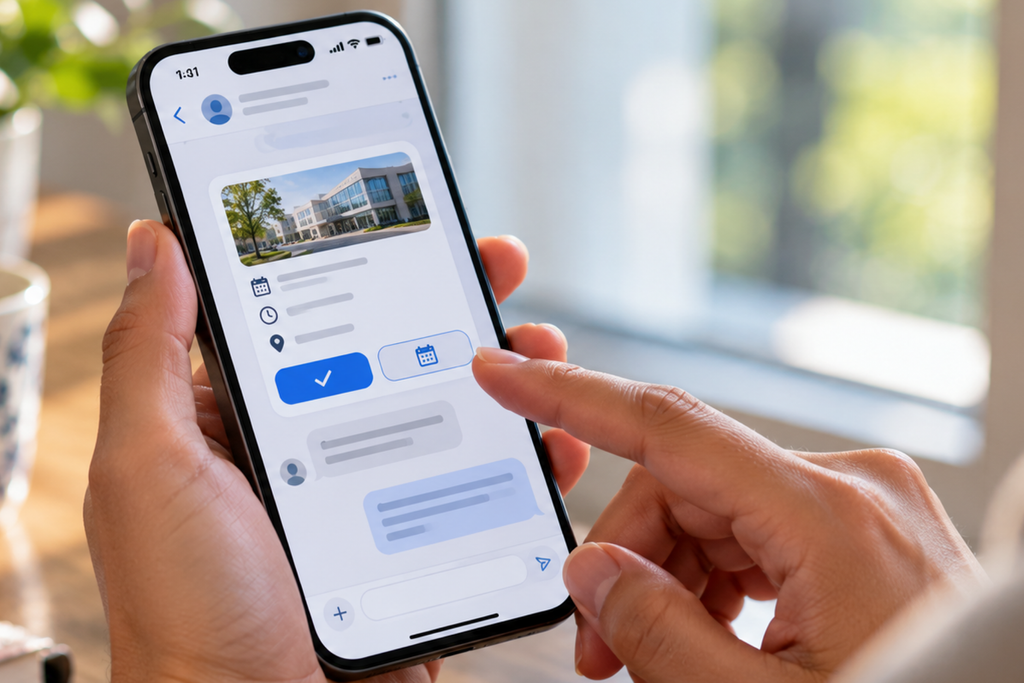
Reminders are valuable, but they address only one cause: forgetfulness. Practices frequently see the effect level off after a point, even as they keep adding messages.
If patients are not showing up because the appointment was booked too far out, because rescheduling is difficult, because they were unsure what the visit involved, or because they hit a barrier at the front desk, a reminder will not change that. It may even prompt the patient to realize they cannot come and then do nothing about it, if there is no easy way to act.
This is the main reason a layered approach outperforms reminders alone. Reminders handle forgetting. Easy rescheduling handles changed plans. Clear information handles uncertainty. Pre-visit intake handles surprises. Each covers a different cause.
Reducing No-Shows in Specialty and Imaging Practices
Specialty and imaging practices face a few specific pressures that general guidance does not always cover.
- Referral-driven demand. Many patients arrive through a referral, and the gap between referral and appointment is a place where patients drop out before they are ever booked. Speeding up that handoff matters as much as reminding patients once booked.
- Preparation requirements. Fasting, contrast, medication changes, and arrival windows mean a patient can attend and still be unable to proceed.
- High cost of an empty slot. Equipment, specialist time, and downstream care all depend on the appointment happening.
- New patients. Specialty patients are often new to the practice, and new patients are more likely to miss appointments.
For these practices, the most effective work often happens before the appointment: processing referrals quickly, giving patients a simple way to book, and sending preparation instructions that are specific to the visit.
How to Measure Progress

Track a small set of numbers consistently, and always use the same definitions.
- No-show rate: patients who did not attend without notice, divided by scheduled appointments
- Late cancellation rate: cancellations too close to the visit to refill
- Reschedule rate: a healthy sign when it rises as no-shows fall
- Lead time: days between booking and the appointment
- Rates by appointment type, referral source, and day of week: to find where the problem concentrates
- Same-day unprepared arrivals: patients who attended but could not be seen
A useful pattern to watch is no-shows falling while reschedules rise. That usually means patients are telling you about changes instead of disappearing, which is the outcome you want.
Where DoctorFare Helps With Reducing No-Shows
No single feature solves no-shows, so it is more useful to match each cause to the part of the process where it can be addressed. The table below shows how DoctorFare’s confirmed capabilities map to the causes covered above.
| Cause of no-shows | What DoctorFare provides |
| Forgetting | Automated reminders through HIPAA-compliant two-way texting |
| Hard to book or change plans | Patient self-service booking through a secure link, with Web, Link, QR, or IVR access depending on office setup, plus rescheduling and cancelling from the patient’s own account |
| Unclear expectations | Exam preparation instructions sent automatically, plus chat support for questions before the visit |
| Missing referrals or paperwork | Referral and insurance upload during booking, with every appointment showing whether a referral has been received |
| Urgent requests getting buried | STAT and urgent appointments flagged automatically |
| No visibility into patterns | Every appointment tracked through its lifecycle, including no-show, with analytics on cancellation and reschedule rates and alerts when a rate crosses a set threshold |
The last row is worth noting. Because no-shows and reschedules are logged as part of the appointment record, practices can see which offices, providers, or users account for the most cancellations and reschedules. That is the kind of detail needed to find where the problem concentrates, rather than treating it as a general trend.
Frequently Asked Questions
What is a good no-show rate?
It varies by specialty and population. Reviews of outpatient care report ranges from about 5% to 34%, and one systematic review found an average of 23% across studies. The most useful comparison is your own rate over time, measured consistently.
Do appointment reminders really reduce no-shows?
Yes. A randomized study found text reminders cut no-show rates by 38%, and a systematic review of phone and SMS reminders found a weighted mean reduction in non-attendance of 34%. Reminders help most with forgetting, and less with other causes.
Are two-way reminders better than one-way reminders?
Generally, yes. A two-way reminder lets patients confirm, ask questions, or request changes, which gives the practice a chance to refill a slot instead of just recording that a message was sent.
Does online self-scheduling reduce no-shows?
Evidence suggests it can. One outpatient study found online bookings had fewer missed visits than phone bookings, 1.8% compared with 5.9%, though results vary by setting.
Why do patients miss specialist and imaging appointments?
Common causes include forgetting, long waits between referral and appointment, unclear preparation instructions, difficulty rescheduling, and unexpected cost or coverage issues discovered at check-in.
Conclusion
Reducing no-shows works best as a layered effort rather than a single tactic. Reminders address forgetting, and they are well supported by research. Easier booking, simple rescheduling, clear preparation instructions, and fewer surprises at the front desk address the causes that reminders cannot reach.
The practical starting point is measurement. Define a no-show consistently, track the rate by appointment type and referral source, and look for where it concentrates. Then fix the most common cause first, and watch whether no-shows fall while reschedules rise.
See how DoctorFare supports the pre-visit side of reducing no-shows →