
If you’re comparing referral tracking software vs manual processes right now, you’re probably already feeling the pain of a broken system: a fax that sat in a queue for three days, a referral coordinator who left and took all the “tribal knowledge” with her, or a specialist’s office that never called the patient back. You’re not imagining it — referral leakage is one of the most expensive, least visible problems in healthcare operations, and the tracking method you use determines how much of it you actually catch.
This guide breaks down exactly how manual referral tracking and dedicated software stack up, with real numbers, common failure points, and a practical framework for deciding which approach fits your practice.
What Is Referral Tracking, and Why Does the Method Matter?

Referral tracking is the process of following a patient referral from the moment it’s created — by a referring physician, a fax, or a patient walking in — all the way through scheduling, confirmation, the actual visit, and the report going back to the referring provider. Every referral passes through five handoff points: detection, scheduling, patient outreach, visit confirmation, and consult note return.
The method you use to manage those handoffs matters because each one is a place a referral can quietly disappear. A referral that “leaks” doesn’t usually vanish dramatically — it just sits untouched until the patient gives up, calls a competitor, or forgets about it entirely.
How Manual Referral Tracking Works (and Where It Breaks Down)

Manual referral tracking typically means a mix of fax machines, shared spreadsheets, sticky notes, whiteboards, and phone calls. A staff member reads an incoming fax, types the patient’s details into a spreadsheet or practice management system, calls the patient to schedule, and manually updates a status column as things progress.
This can technically work in a very small practice with low referral volume. But it depends entirely on one thing: a human being catching every single referral, every single time, with no exceptions.
The Hidden Costs of Spreadsheets, Faxes, and Sticky Notes

Manual tracking looks “free” because there’s no software subscription. In practice, it’s expensive in three ways:
Labor hours. Staff spend hours each week manually transcribing faxes, chasing down patients, and reconciling spreadsheet entries with what actually happened.
Error rate. Hand-typed patient names, phone numbers, and reasons for referral introduce transcription errors that delay scheduling or send communications to the wrong contact.
Institutional memory risk. When the one coordinator who “knows the system” is out sick or leaves, the tracking process often breaks down with them, since the logic lives in someone’s head instead of a shared system.
Common Failure Points in Manual Workflows

Referral leakage rarely stems from network design or insurance issues the way most practices assume. The bigger issue is almost always what happens in the gap between when a referral is written and when it’s actually scheduled — the follow-up call that never got made, the fax that sat unread, or the status update that never happened. Industry data suggests that a large share of faxed referrals never result in a scheduled appointment at all, and most clinic leaders can’t say with confidence where their referrals are actually going once they leave the fax machine.
What Is Referral Tracking Software?
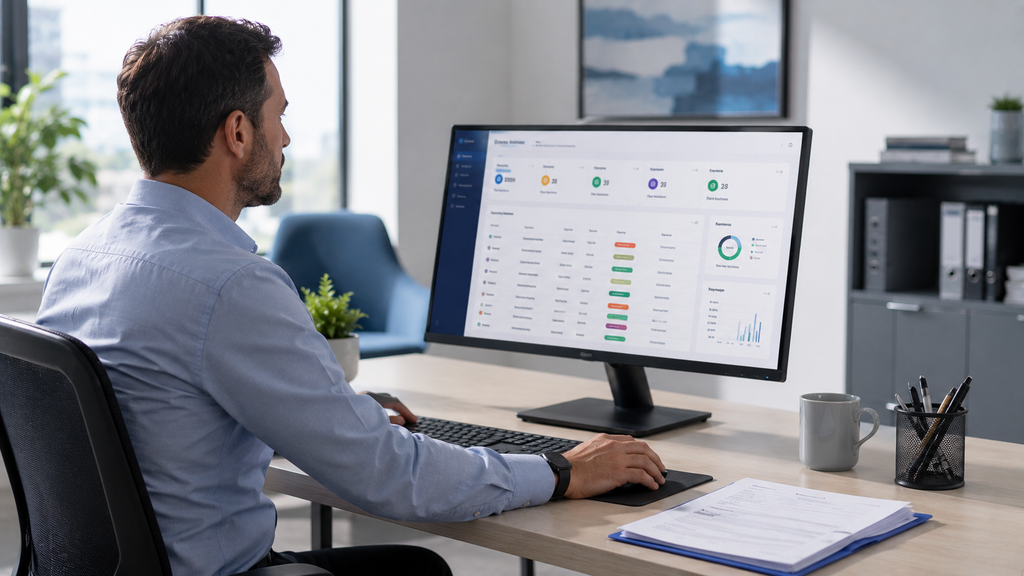
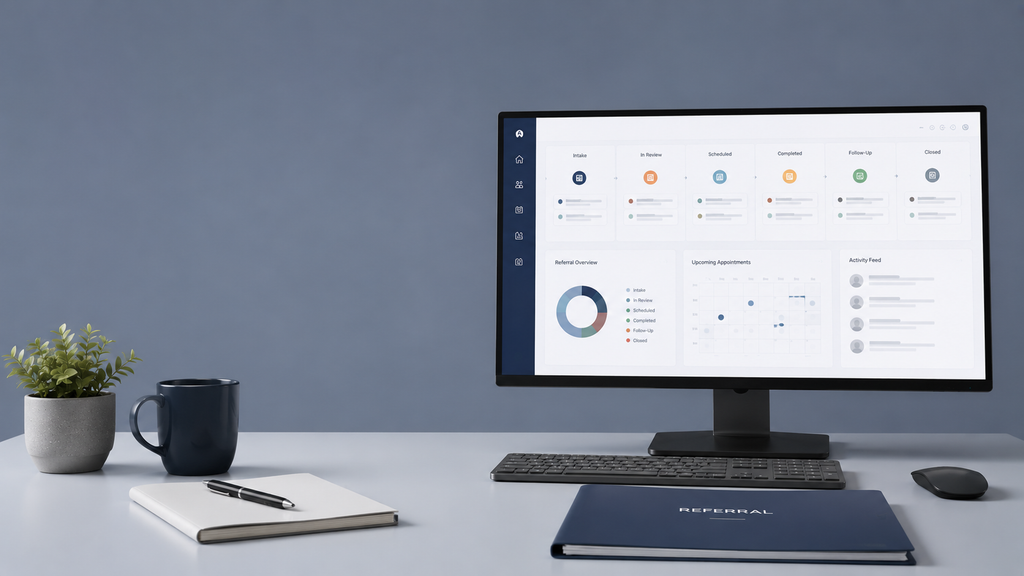
Referral tracking software is a purpose-built system that automatically captures incoming referrals, routes them to the right scheduler, tracks status in real time, and gives leadership visibility into where referrals are getting stuck — without relying on any single person remembering to update a spreadsheet.
Core Capabilities to Look For
When you’re evaluating referral tracking software, the features that actually move the needle are:
- Automated referral capture (including reading faxed and handwritten referrals)
- Real-time status tracking from intake to completed visit
- Referral analytics and dashboards showing where referrals break down
- Two-way patient communication for scheduling and reminders
- Specialist and provider matching based on availability and specialty
Referral Tracking Software vs Manual: Head-to-Head Comparison
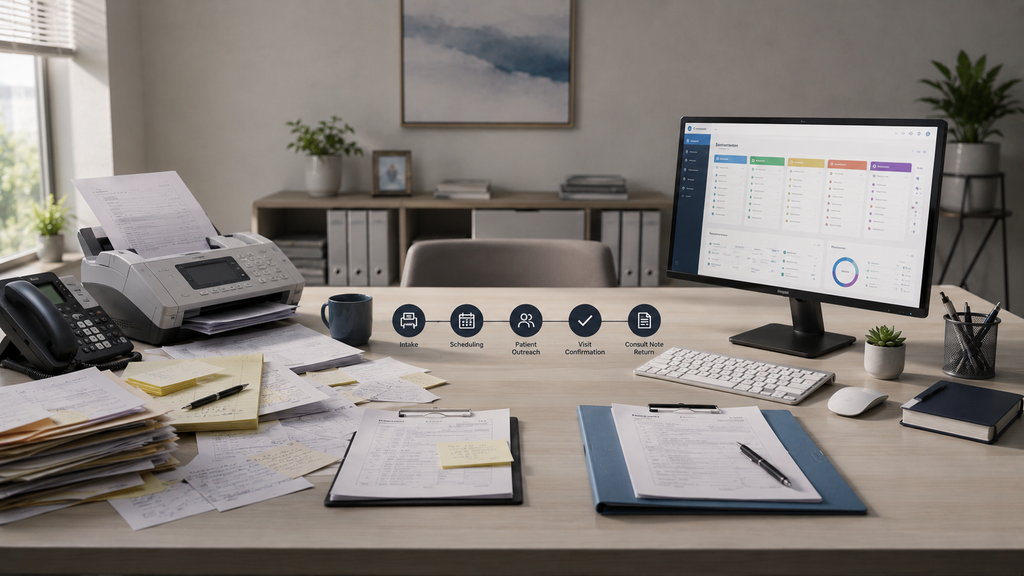
Laid side by side, the two approaches diverge on almost every factor that matters to a busy practice:
Referral capture. Manual tracking relies on someone hand-typing details from a fax or phone call. Software extracts that information automatically the moment a referral arrives.
Visibility into status. With manual tracking, status lives in a spreadsheet — if someone remembers to update it. Software gives you a real-time dashboard instead.
Error rate. Manual entry introduces transcription mistakes; automated extraction is far more consistent.
Staff time required. Manual processes eat several hours a week. Software cuts that down to minutes spent on genuine exceptions.
Scalability. A manual system holds up at low volume but breaks down as referrals scale. Software scales with volume by design.
Reporting on leakage. Manual tracking surfaces leakage rarely, and usually after the fact. Software reports on it continuously, so you can act before a referral is fully lost.
Patient follow-up. Manual tracking means staff placing phone calls one at a time. Software automates texts and reminders across the whole patient list.
Dependence on individual staff. Manual tracking depends heavily on specific people knowing the process. Software keeps that knowledge in the system, not in any one person’s head.
The core difference in referral tracking software vs manual processes isn’t just speed — it’s that software makes referral status a system-level fact instead of something that lives in one person’s memory.
The Real Cost of Manual Referral Tracking (With Numbers)
The financial impact of poor referral tracking is well documented, and it’s larger than most practice managers assume:
- Health systems lose an estimated $821,000 to $971,000 per physician annually to referral leakage.
- Roughly 55–65% of referrals are sent out-of-network or never followed up on effectively, even when an in-network option exists.
- Referral leakage costs U.S. hospital systems an estimated $150 billion annually across the industry.
- Around 1 in 4 health systems don’t have a clear picture of how much revenue they’re actually losing to leakage.
- For an independent specialty practice, unmanaged referral gaps can run close to $2.2 million a year in lost downstream revenue.
Even a single missed imaging referral carries a real price tag — the average scan referral is worth roughly $400–$1,200 in lost revenue when it’s never scheduled. Multiply that by the number of faxes sitting untouched in a queue on any given day, and the case for moving off manual tracking writes itself.
Benefits of Switching to Referral Tracking Software
Practices that move from manual processes to dedicated referral tracking software typically see improvement in four areas:
Faster time-to-schedule. Automated capture means a referral can be routed and offered an appointment slot within minutes instead of days.
Fewer dropped referrals. Status tracking flags anything that’s stalled before it becomes a lost patient.
Reduced administrative burden. Staff spend less time on data entry and phone tag, and more time on higher-value patient interactions.
Data-driven decisions. Leadership can finally see which referral sources, specialties, or locations are leaking — and fix the actual bottleneck instead of guessing.
Signs Your Practice Has Outgrown Manual Referral Tracking
Manual tracking isn’t automatically wrong for every practice — but it’s worth reassessing if any of the following sound familiar:
- Your team can’t tell you, without digging, how many referrals came in last month and what happened to them
- Referral coordinators regularly work late catching up on data entry
- Patients call asking “did my referral go through?” more than occasionally
- You’ve had a staff turnover event that caused referrals to fall through the cracks
- Faxed referrals sit for more than a day before anyone acts on them
- You genuinely don’t know your practice’s referral leakage rate
If two or more of these apply, the labor cost of staying manual is likely already higher than the cost of switching.
How DoctorFare Solves the Referral Tracking Problem

DoctorFare has spent years in the medical referral and patient access space, powering over 500,000 appointments and studying exactly where practices lose referrals. That experience shaped a platform built specifically to close the gaps manual tracking can’t.
- AI Referral Capture reads faxed and handwritten referrals automatically, extracting patient name, reason for visit, and referring provider, then auto-populating the patient record — no manual typing, and missing or unclear information gets flagged instead of quietly ignored.
- Referral Analytics replaces guesswork with visibility, showing exactly where referrals break down across your workflow instead of surfacing the problem after the patient is already gone.
- Referral Management turns each incoming referral into a tracked record from intake through completed visit, so nothing depends on a single coordinator’s memory.
- Specialist Network matching helps route patients to the right specialist and office based on real-time availability, reducing the back-and-forth that causes delays.
- Patient Self Service and Messaging let patients book, confirm, and receive prep instructions through HIPAA-compliant two-way texting, cutting the phone-tag that stalls manual scheduling.
- Appointment Management brings booking, communication, and referral status into one screen instead of scattering them across spreadsheets, fax trays, and separate systems.
Practices using this kind of integrated approach report a 24% increase in completed appointments, 98% patient satisfaction, up to 15 fewer hours of admin work per week, and most see a full return on investment within the first 60 days.
How to Choose the Right Referral Tracking Software
Not all referral tracking tools solve the same problem. Before choosing one, check that it covers:
- Automated intake — does it actually read faxes and extract data, or just store them as PDFs?
- Real-time analytics — can you see leakage points today, not in a monthly report?
- HIPAA compliance — is patient communication secure by design?
- Patient-facing tools — can patients book and confirm without a phone call?
- Proven results — ask for real numbers on appointment completion and admin time saved, not just feature lists.
Frequently Asked Questions
Is referral tracking software worth it for a small practice?
Even small practices lose revenue to untracked referrals, since a single missed imaging referral can cost $400–$1,200. If your team spends more than a few hours a week on manual referral entry and follow-up, software typically pays for itself quickly.
How is referral tracking software different from a standard patient record system?
Most systems can store a referral order but don’t actively track status, flag stalled referrals, or automate patient outreach. Dedicated referral tracking software fills that gap.
What causes most referral leakage — network issues or workflow issues?
Workflow issues are the bigger driver. A large share of leaked referrals trace back to broken follow-up between the referral order and the scheduled visit, not to a lack of in-network options.
Can referral tracking software read handwritten faxes?
Modern AI-powered referral capture, like DoctorFare’s, is built to read both handwritten and typed faxes and extract the relevant patient and referral details automatically.
How long does it take to see ROI from referral tracking software?
Many practices see measurable improvements in completed appointments and reduced admin hours within the first 60 days of implementation.
Conclusion
When you weigh referral tracking software vs manual processes side by side, the manual approach only looks cheaper on paper. In reality, it shifts the cost onto staff hours, transcription errors, and referrals that quietly disappear before anyone notices. Referral tracking software turns that invisible leakage into a visible, fixable problem — with automated capture, real-time status, and analytics that show exactly where to intervene.
If your team is still tracking referrals across faxes, sticky notes, and spreadsheets, the fastest way to find out how much revenue that’s costing you is to see what an automated system catches in the first month.